Dear Diary,
As I sit here in my small apartment in Praha, far from the old life in Brno, I often pause with pen in hand and let the memories wash over me like the gentle rain on our city streets. Those years of endless tension still feel raw, yet they taught me so much about seeking calm amid chaos. I recall that particular afternoon when Matěj and I climbed the stairs and froze at the sound of my mother’s voice booming from behind the door: “What’s wrong with you again?! How much longer must this drag on?! I’ve grown weary of every bit of it!” Her words carried through the whole building, and in that instant our eyes locked in wordless agreement. We understood without speaking that retreating was wiser. Sighing together, we turned and walked quietly away from our building, choosing not to return home that evening.
Who would want to spend the night listening to parents locked in one argument after another? Certainly not us. We headed straight to the neighboring entrance where our grandmother Jarmila lived. Her flat had become our sanctuary in recent times. What once were occasional weekend visits now turned into almost nightly stays, a place to breathe freely. The atmosphere back home had grown unbearable long ago. Our parents seemed to forget everything else as they shouted without pause. Worst of all, they increasingly tried to drag us into their battles. Mother would turn sharply toward me and demand, “Tell me, am I not right? You agree with me, don’t you?” Father would jump in before any reply, addressing Matěj: “No, I am the one who’s correct here! Back me up!”
We stayed silent. Neither of us wished to pick sides or become entangled in their endless disputes. We simply longed for quiet, for peace, for that comforting warmth we found only with Jarmila. These scenes repeated daily, like an old melody stuck on repeat that no one dared to silence. We had learned to spot the warning signs early: a sharp tone, abrupt gestures, or the way they glanced at each other. Those cues told us it was time to slip away. What child would enjoy living in such constant strain, where any chat could erupt into a loud clash in moments?
Matěj and I could never figure out what had sparked this family breakdown. Our household had never been perfect like in advertisements, yet before, our parents knew how to compromise. Disagreements happened, of course, but they ended in calm talks rather than yells. Mother might frown, father raise his voice a little, yet within half an hour everything settled. We would gather at the table again for tea and discuss weekend plans. Then, about two years prior, everything shifted. It was as if someone had quietly swapped our old parents for strangers who found reasons to fight in the smallest details. A mug left dirty on the table? A long lecture on carelessness and disrespect. A shirt hung on the wrong hook? Sharp comments about household order. A spoon forgotten in the sink? Almost a crime needing lengthy discussion.
One evening I sat in Jarmila’s kitchen, stirring my tea without thinking. I watched the amber swirls in the cup for a long time before asking with bitterness, “How did it come to this, babička? Everything changed after their shared trip abroad. What happened there?” Jarmila paused, set her cup down, and gently touched my hand. She too only guessed at the reasons for the rift, and those guesses brought her no joy. “The grown-ups will work it out,” she replied softly, trying to sound steady. “Sometimes people need time to decide what’s best.” I nodded, though doubt clouded my eyes. I sensed she held something back, yet I did not press. What use would it be? As long as they saw us as children, they would share nothing serious.
“We cannot bear the shouting any longer!” Matěj burst out in despair. “We cannot even finish homework or read a book in peace! I barely remember the last time we sat together as a family at the table. If living together is so hard for them, let them separate and it will ease things for everyone!” The words spilled out on their own, carrying the truth of recent months. He spoke not just for himself but knew I felt the same. Silence had vanished from our home long ago: mother would snap something, father would answer irritably, and another clash would begin with no place to hide.
“Matěj…” Jarmila faltered. She set aside her knitting, studied him closely, and slowly shook her head. “Have you considered what happens if they separate? You two would be divided. Are you ready to live apart from Eliška?” “We will live with you!” I said at once, looking at her with pleading eyes. “We already spend nearly all our time here! You would not mind, would you?” Jarmila went still. She understood our pain, saw how tired we had grown from the constant parental fights. On one hand, we would be safe with her in a peaceful setting where homework could be done without yells and books read in quiet. She loved us deeply and stood ready to wrap us in care. On the other hand, what about our parents? How to explain that we no longer wanted to stay home? Would they accept it? And if they did, how might it change their bond with us? Could this step lead to a complete break?
“Let us not rush,” she said with a deep breath. “I am always glad to have you here, you know that. But first let us try speaking with your mother and father. Perhaps together we can find a way to mend things.” “Do not worry, we will talk to them ourselves,” I stated confidently, smiling happily. Jarmila was nearly on our side, and that mattered most. “Just do not refuse us, please! We truly cannot stay there anymore! They would be better off apart, otherwise they might truly harm each other one day! I saw father raise his hand toward mother yesterday… He did not strike, truly! But he came close.” I fell quiet, recalling that awful moment. I had gone to the kitchen for water and stopped in the doorway: father stood half-turned to mother, his arm jerking upward, and she instinctively ducked. Seconds later he lowered it, yet that second stretched into eternity for me.
“Babička, agree!” Matěj urged, supporting me. He stepped nearer and took her hand as if fearing refusal. “We will help you with everything around the house. Just do not send us back there. They pay us no attention at all! Yesterday I approached father and mentioned a parent meeting at school. Do you know what he answered? ‘Go ask your mother!’ So I did. Guess what she said?” “Go ask your father?” Jarmila asked quietly, already knowing. “Exactly!” Matěj gave a bitter laugh. “Then they argued for two more hours over who would attend. They sat in separate rooms and shouted across the hallway while I just stood listening.” “And I asked them to sign permission for a museum trip,” I added, eyes down. My fingers twisted the sleeve edge nervously. “Now I am the only one in class who cannot go. Neither signed the form. Instead they started arguing againmother yelled that it was father’s duty, and he insisted she handle school matters.”
Jarmila watched us and saw our deep fatigue. In our eyes lay not ordinary tiredness but the kind built over months, where each day mirrored the last, where family warmth gave way to constant clashes and support turned to indifference. “It is always like this,” Matěj sighed, shoulders drooping. His voice carried exhaustion, as if he had repeated it hundreds of times. “Any request from us becomes fuel for another fight. We do not even want to return home. A couple of days ago we arrived at eleven at night, and do you think they scolded us? No! They simply sent us to bed without asking where we had been. Later they spent ages blaming each other for poor upbringing.”
We sighed in unison again. In recent months we had seriously considered that our parents’ separation might be the only escape. Yet the idea of being split apart frightened us, something divorce would force. One of us would stay with mother, the other with father, and our close bond would shrink to rare weekend visits. We whispered options late at night in our room. Once Matěj jokingly suggested running away, just grabbing bags and heading wherever. He said it with a smile to lighten the mood, but I took it seriously for a moment. My eyes lit up briefly before I whispered, “What if we really left? Even for a couple of days…” In that instant we both saw how unbearable the home had become, making even escape seem less crazy.
Then the idea struck us: Jarmila! Why not move in with her? The thought came to us together, as if our minds worked as one. I voiced it first: “What if we ask babička to let us live here? She would never yell or shout. We would not have to hear those endless arguments…” Matěj added right away: “Yes! She is kind and always supports us. Her flat is spacious enough for us all.” We began imagining a new life: peaceful mornings, quiet homework time, evenings playing board games with her. No shouts, no accusations, no need to hide in our room to avoid the heat of the moment. For the first time in ages, hope flickered in our hearts. Let the parents sort their own issues; we would finally find restthat was what we pictured as we dreamed of life with Jarmila.
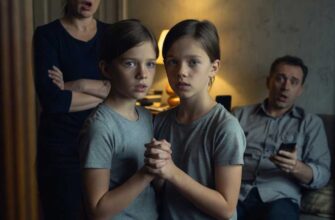
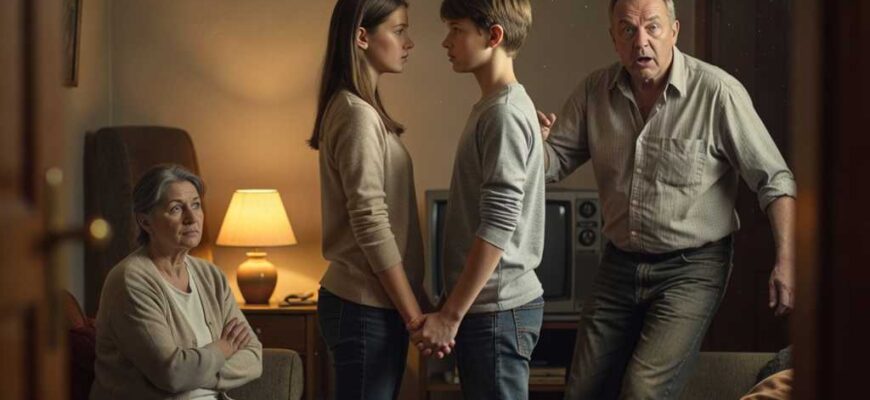
“Mother, father, we need to talk seriously,” we said firmly one evening, standing before them. We had waited until both were home and entered the living room resolutely. I held Matěj’s hand tightly for steadiness. “But first promise to hear us out completely before sharing your views.” Václav looked up from his phone, surprised. Veronika, sorting items on the sofa, straightened suddenly. Their faces showed disbelief at what we had said. “This is all your doing!” she huffed, crossing her arms. “The children are already setting conditions for us! As if we must report to them!” “Who are you to talk!” Václav flared, setting the phone aside. “I am always at work, providing for the family. You were with them all the time! And what have you taught them? Why do they now give orders?”
We glanced at each other. We had expected thisthe talk sliding into their usual blame game. Yet we could not back down. “Enough!” I exclaimed, nearly in tears. I stepped forward, trying to speak clearly and calmly though everything inside trembled. “Matěj and I have thought it over and decided you need to separate.” The room fell silent at once. Veronika froze with mouth open, and Václav rose slowly from the sofa. “Now that is news!” her voice turned threatening. “Eliška, you are still too young to tell adults how to live! And what else have you ‘decided’? Perhaps divide the flat for us too?” “If you do not separate, we will contact the child protection authorities,” Matěj said, gripping my hand for strength. His voice stayed firm, though he barely believed his own words. “And then, father, you could lose your job. Your company does not welcome scandals, does it? You yourself said reputation means everything.”
“And you, mother,” I continued, meeting her eyes directly, “will lose the respect of neighbors. They will not even speak to you! Everyone knows how you yell at each other, and we could add details!” “They are threatening us! Just look at them!” Veronika finally managed, shifting her gaze between us. “These are our own children! How can you act this way toward us?” “We are not threatening,” Matěj said quietly but surely. “We only want you to see that this cannot continue. We are exhausted! Tired of the shouts, of you not hearing us, of simple requests turning into fights.” “You will separate, move apart, and we will live with babička,” we finished together, as if rehearsed. “This will be better for everyone: peace for us, fewer conflicts for you. We no longer wish to stand between you like between two fires.”
Our parents stood frozen. For the first time in ages, they had no reply. Usually in such talks they would argue and interrupt at once, hunting for blame, but now both seemed struck dumb. Their thirteen-year-old twins had acted in ways they never expected. Matěj and I stood side by side, hands linked, gazing at them steadily without our usual shyness. We spoke of serious matters the adults themselves avoided thinking about. The couple had considered separation before but always stopped at the same question: with whom would the children stay? Splitting twins seemed unthinkablethey were so close, doing everything together and supporting one another. Our parents could not imagine separating us, forcing different homes and only weekend meetings.
They had never thought of Jarmila’s place before. That idea had not occurred, perhaps because both were too caught in their grievances. But hearing our suggestion now, Václav and Veronika could not help wondering if this might be the solution. Jarmila loved us, her flat was roomy, and she was always happy to see us… Perhaps it would ease at least some problems? “I will call mother,” Václav said at last through clenched teeth. His voice sounded muffled, words coming with effort. “If she agrees…” He did not finish. Veronika cut in sharply, her tone carrying a fatigue that surprised even her: “Then we can finally stop tormenting each other. Call her. I will be glad not to see your face every day.” Her words hung in the air. She had not meant to sound so harsh, but years of built-up hurts let them slip out. “And I will be just as glad!” Václav replied, hiding his pain behind irony. No anger colored his tone, only a bitter smile at what their marriage had become. He took out his phone and slowly dialed. As rings sounded, both looked in different directions, avoiding eyes. They did not yet know where this would lead, but sensed a point of no return might already have passed.
On that day our family made a fateful choice. It began with a long talk between Václav and Jarmila. She listened carefully without interrupting, only asking occasional questions. When he finished explaining everything, a pause followed. Jarmila sighed deeply and said, “If you both see this as better for the children, I agree. They will be safe here, and I will look after them.” By evening the couple met in the kitchenwithout shouts or reproaches for the first time in ages. They sat facing each other and discussed details. Step by step they agreed that separation was the only sensible path. We would move to Jarmila’s, and they would send her monthly support in Czech crowns for our needs. Neither planned to abandon us. Both swore to visit on weekends but on different days to limit their own contact.
“I will come Saturday mornings to take them for walks, and you on Sundays,” Václav said wearily, and Veronika nodded in agreement. “That will be simpler. The main thing is the children must not feel abandoned.” Their goal was to reduce interactions and avoid new clashes. They promised not to discuss each other around us, not to pull us to sides, not to argue in our presence. “We are still their parents,” Václav noted. “And we must remain so, even if we are no longer spouses.” Time showed the decision was right. We could finally relax and live like ordinary teens. I joined a drawing club, something I had long wanted but lacked time for amid constant worries. Matěj started soccer and made new friends on the team. We spent time together again: walking through the city, going to films, talking about school without fear of sudden fights erupting.
Stability returned to our studies too. Now we had a quiet spot for work, no distractions from yells. Homework got done calmly, without nerves, and grades improved quickly. Teachers noticed: “You have become so focused, you two! Keep it up!” Gradually life settled into a new rhythmnot perfect, but steady and predictable. We no longer hid in our room, jumped at loud voices, or fretted over every step. We simply lived as teens should, grateful to find support in tough times.
Five years on, life flowed steadily for the Dvořák family. Matěj and I had grown used to the new routine: studies, clubs, time with friends, warm evenings with babička. Our parents still visited on alternate days, each bringing gifts and attention but no old complaints. Over the years they had learned to speak politely and calmly, without old anger flares. The first real meeting between the former couple happened at our graduation. The school held a formal evening, and both came. They started warily, sitting at opposite ends of the hall, but the ice slowly melted. When dancing began, Václav approached Veronika unexpectedly: “Perhaps we could dance? Recall the old days.” She hesitated briefly, then nodded. Afterward they sat long in the schoolyard, watching graduates enjoy themselves by the fountain. Conversation started naturallyfirst about us, then the past.
They talked much that night, recalling happy marriage moments and behaving well. They spoke not of old hurts but of the good that once connected them. From afar, we watched and felt glad yet pained to see two closest people treat each other almost like enemies. But then came an unexpected turn. The next day they invited us to a café. Over tea they took hands after a glance, and Václav announced with a broad smile: “Children, your mother and I have thought it over and decided to remarry. Over these years we have realized our feelings never faded! We still love each other and want to become a family again.” His voice rang joyfully, as if sharing the happiest news. Veronika beamed, clearly expecting delight.
We exchanged looks, our faces darkening at once. Doubt flashed in my eyes, and Matěj clenched his fists under the table. Back to the same mistakes! What were they thinking? Could they live together without clashes? “Are you serious?” was all I could manage. “Absolutely,” Václav replied confidently. “We have both changed. Learned to listen to each other. And we want to give our family a second chance.” We stayed silent. Conflicting feelings stormed inside: we wanted to believe they had truly shifted, yet feared repeating the old pain. Still, we did not argue against it. We offered no comment, which hurt them deeply. Veronika looked at us bewildered: “What, you are not happy? We thought you would be glad for us.” We merely glanced at each other and shrugged. What could we say? “Do not do this! Do not ruin your lives!”? Words stuck in our throats. We did not want to seem cold, but pretending everything was fine was impossible. The rest of the meeting felt forced. They tried sharing plans; we nodded politely, but our thoughts drifted. On the way home I whispered to Matěj, “I hope they know what they are doing.” He only sighed in reply.
“Does this mean we head to the capital?” I asked, opening my laptop to check university sites. “Farther from this madness. I can already picture how this circus will end!” “Of course we are going,” Matěj said firmly, his voice carrying grown-up weariness. He ran a hand through his hair as if shedding the weight of recent months. “They will manage peacefully for a month, maybe two at most. Then it starts again: shouts, slamming doors, accusations… I no longer want to be trapped in their relationship. I do not want to wonder each morning what mood they woke in and which of us will face the next wave of complaints.” He stood and paced, absentmindedly gathering scattered books. One thought circled in his mind: why do adults, meant to model wisdom and stability, act like unbalanced teens? Why repeat the same errors instead of fixing issues?
“We need to leave,” he repeated, stopping at the window. Outside, twilight slowly fell, painting the city in soft orange hues. Matěj gazed into the distance as if trying to glimpse his future. “Far away. So far that their fights cannot reach us. Let them sort it out themselves. We are no longer their therapists, mediators, or lightning rods. We have our own lives, our own dreams, and I will not let another round of parental folly destroy them.” “When do we submit applications?” I asked calmly. “Tomorrow,” Matěj answered without hesitation. “So we definitely do not change our minds.” I nodded silently, eyes on the screen. Pages from Praha universities flashed byI had spent a week studying programs, dorm conditions, and job prospects after graduation. Beside the laptop my notebook grew with lists: pros and cons of each option, required documents, deadlines, and contact details for admissions offices.
“Most importantly, study in peace without their dramas distracting us,” I said quietly, as if concluding my thoughts. “It is good we will be so far.” “Precisely,” Matěj agreed, sitting beside me. He tilted his head slightly, reading the lines. “And when they start arguing again over who is to blame, we will not even hear it. Let them call, complain, try to summon us for a ‘family meeting’we are no longer part of it. And their wish to ‘give the relationship a second chance'” he gave a bitter smile”that is their choice, not ours.”
Veronika and Václav did remarry. This time they skipped any grand celebration: no extra costs, no attention drawn, and honestly they did not feel the need for anything lavish. They kept it to a simple ceremony at the registry office and a dinner with just close family and a few friends. In the photos from that day they looked truly happy. Smiling, holding hands, gazing at each other with tenderness. Their intertwined fingers, soft looks, and light touches showed in the shots. It seemed all hurts were forgotten, that years apart had helped, and now they knew exactly what they wanted, with only a bright future ahead. Looking at those images, we could not help wondering: maybe this time things would truly differ?
But… alas, no. The first weeks after the wedding passed surprisingly peacefully. They tried being more attentive, saying “thank you” often, and not nitpicking small things. Yet old habits slowly crept back. Within a month raised voices returned to their flat. At first came restrained reproachesquiet but sharp: “Did you not clean up after yourself again?” “Why did you not say you would be late?” “You could have helped since you were home.” Then open conflicts began. Arguments arose over trifles: someone left damp towels in the bathroom, someone forgot bread, someone turned the television too loud… Words grew harsher, voices louder, gaps between clashes shorter.
After two months, just as Matěj had predicted, things reached a breaking point. One evening an argument over who should buy groceries turned into a storm. Václav, unable to hold back, angrily threw a mug at the wallit shattered with a loud crash, pieces scattering across the kitchen. Veronika, equally furious, grabbed a plate from the table and hurled it to the floor. The sound of breaking dishes echoed through the flat. After such scenes they always tried calling us. Each time the conversation started the same: one would dial while still catching breath after the fight and pour out accumulated grievances. “Can you believe what he said today?” Veronika would break into sobs when I answered. “He does not even try to understand me!” “Son, you must understand me, she has no self-control,” Václav would say anxiously to Matěj. “I am trying, truly trying, but she seems to hunt for excuses!”
Yet Matěj and I had learned to interrupt these monologues gently but firmly. We no longer got drawn into long discussions or tried to judge who was right. Our replies stayed short yet steady. “Mother, I am in class now, I will call back later,” I would say calmly, checking the clock: twenty minutes remained before the lecture, but I did not want to hear another outburst. “Father, I have urgent work, let us discuss this on the weekend,” Matěj would reply without looking up from his laptop. He knew that letting a parent vent would stretch the call to an hour, followed by more calming efforts. “Later” and “on the weekend” always got postponed. We found reasonsstudies, part-time jobs, meetings with friendsand gradually the calls grew rarer. We felt no guilt: we were simply guarding our nerves and time, knowing we could not fix what happened between our parents.
We truly had our own lives nowfull, meaningful, distant from parental dramas. Each day brought our own concerns, interests, and plans rather than waiting for the next clash behind the wall. I threw myself into psychology studies. I enjoyed understanding how the human mind works, why people act certain ways, and how to help those in difficult spots. In my third year I began volunteering at a center for teens from troubled families. There I led group sessions, helped them express feelings and find ways out of tough situations. I saw echoes of our own past in those teens and tried to give them what I once lacked: attention, support, the sense of being heard.
Matěj found his path in IT. From early courses he grew passionate about programmingits logic fascinated him, along with the chance to build working systems and solve complex technical problems. He spent much time at the computer, learning new programming languages and joining student hackathons. In his fourth year his team placed third in a regional mobile app development contest, boosting his confidence and confirming he was on the right track. He took a part-time job at a small IT company, quickly proving himself reliable and skilled. Working on real projects taught him to collaborate with colleagues, manage time well, and handle unusual situations.
We began planning a future without glancing back at parental fights. I dreamed of opening my own practice to help families communicate better. Matěj considered starting his own business. We discussed ideas over café tea, drew up schemes, and noted plans in notebooks. In those moments we felt we had support. We had a path. We had a life that belonged only to us. When Veronika and Václav tried once more to pull us into their issuescalling in tears to describe how badly things stood and how they could not understand each otherwe answered calmly and firmly. We had discussed beforehand how to handle the talk without slipping or falling into our old mediator role.
“Enough, dear parents, handle it yourselves,” I stated firmly. “You have your life, we have ours.” “But you are our children!” Veronika sobbed. “You must support us!” “If you behaved normally instead of like little children, we would support you,” Matěj replied at once. “You made a mistake remarrying and keep tormenting each other. You cannot coexist normally in one space, so why keep hurting one another? Separate already and move apart.” Those words might have seemed harsh, yet Matěj and I simply wanted to live in peace. As I close this entry, I realize how far we have come. Protecting our own well-being was the hardest yet most necessary choice, and I am grateful we found the strength to make it.